Lawn alternatives for a family yard: keep the play space, rethink the edges
Choose where to retain grass, add planting or build a stable route based on how the yard is used.
The best lawn alternative depends on what each area has to do. Keep a durable grass area where children or pets repeatedly run and turn. Replace less-used edges with planting or a path, where the surface can serve a clearer purpose. A single groundcover is unlikely to work equally well everywhere.
Track wear before drawing a plan
After a busy weekend, note where shoes have flattened the grass, where people take shortcuts and where chairs leave marks. Separate the open play area from travel routes and quiet margins. A worn strip from the gate may need a stable path, even if it occupies only a small part of the yard.
Compare surfaces by use
A perennial border can replace turf along an unused edge but will need establishment care, weeding and occasional division. A meadow-style patch suits low traffic and calls for a mowing and cuttings plan. Groundcovers vary in tolerance of footsteps. RHS describes lawn chamomile for sunny places with light foot traffic, so treat it as an option for a quiet corner, with suitability checked locally.
Worked example: one yard, three surfaces
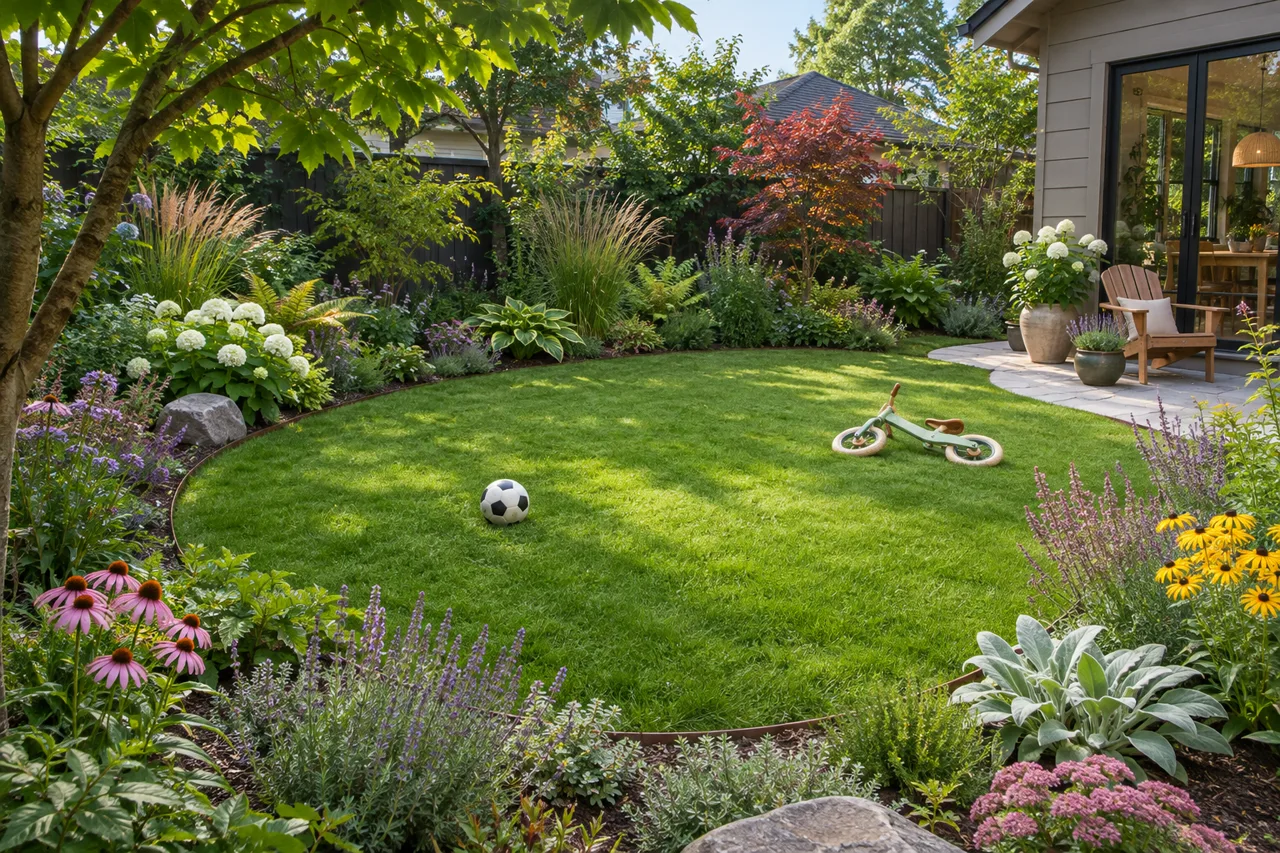
A family uses the middle for ball games, walks along one side to the shed and never sits on the narrow strip against the fence. Keep a rectangular play lawn. Mark a direct, stable route to the shed, and widen the strip beside the fence into a planted bed. Use the garden hose to test the lines first; check that a mower still turns and a wheelbarrow passes.
Convert a small area first
Choose the least-used edge and test the new border for a season. Record the time spent mowing compared with watering and weeding the replacement. If an attractive groundcover thins where people cut across it, redirect the route or give it a stable surface. Expand only after the trial has survived the conditions that matter to you.
Draw the play space and walking routes separately
First mark the biggest shape you actually need for play. Then walk the route from the door to the gate and mark it while carrying something bulky. A shortcut across the planting can develop even in a yard with enough grass for games. Where the route and play area overlap, keep the surface clear. Where they diverge, a dedicated path gives both the planting and the lawn edges a better chance to establish.
Compare surfaces by what happens on them
Keep a resilient surface where children make fast turns or where dogs run the same circuit each day. Flowering groundcovers can be useful on a lightly used edge, but their tolerance of foot traffic varies. Test a candidate on a small area that gets similar light, soil moisture, and use before ordering enough for the entire yard. A planted border can absorb a badly shaped strip that is awkward to mow. Where the main need is access to a gate or bin, allow for a proper route with enough room for the widest object you regularly move. Test a candidate surface with ordinary shoes and with any wheels you use there. A surface that feels fine during a short walk may be difficult with a small wheel or when wet.
Convert an edge first and check the handover from lawn to planting
For example, a rectangular yard might have a play area in the center, a shaded corner that rarely grows well, and a narrow strip behind a shed. Keep the space required for the game you actually play, then mark the mowing turn around it. Convert the shaded corner first if it stays out of the main traffic. Lay out the new bed edge with a hose and try mowing along it once before cutting the turf. Avoid narrow points that leave scraps of grass difficult to reach. Watch where feet land when people enter or leave the lawn. If shoes repeatedly land beyond the marked edge, shift the edge or add a durable landing area before establishing the planting.
Compare maintenance over a full growing season
Record how often you mow, trim edges, weed, and water each area. New beds can need more attention while plants establish and there is open soil between them. A small test is useful if you record enough time to see how the planting handles dry weather, leaves, or the busiest use of the yard. When you expand the change, keep a clear edge and a way to reach the plants without walking on them. If you want to replace another piece of lawn, tackle the patch with the greatest maintenance burden and the least traffic first.
Start with the hardest strip to mow
A shallow strip squeezed between a fence and a path can take disproportionate effort to trim. Observe the light and water there before choosing a groundcover. Widen the planting where possible so it has enough space at maturity and leaves a separate maintenance route. If you use edging, check whether the mower can follow it without leaving a narrow ribbon of grass. Retain access to the fence for repainting or repairs, especially where plants will lean into the route as they mature.
Set a clear expansion decision
Mark the test area on a simple map and take a photograph before removing turf. At the end of the trial ask whether the border filled in, where weeds still get through, and whether the new surface works after heavy use. Record which parts of the yard are still taking the most maintenance. If the test area saves mowing time but people cut across it, redesign the path before making the next bed bigger. If the layout works and the plants are establishing, extend it in a second stage using what you learned about access, watering and upkeep.