Small backyard privacy ideas: screens, trellises and planting
Find the sightline that exposes your patio, then compare a screen, trellis and hedge before losing usable space.
The most space-efficient backyard privacy fix is usually to screen a specific sightline near the place you use. Start with the chair, dining table or door you want to protect. A short screen there can be more useful than extending a fence along the full boundary, especially if the yard is also your main source of daylight.
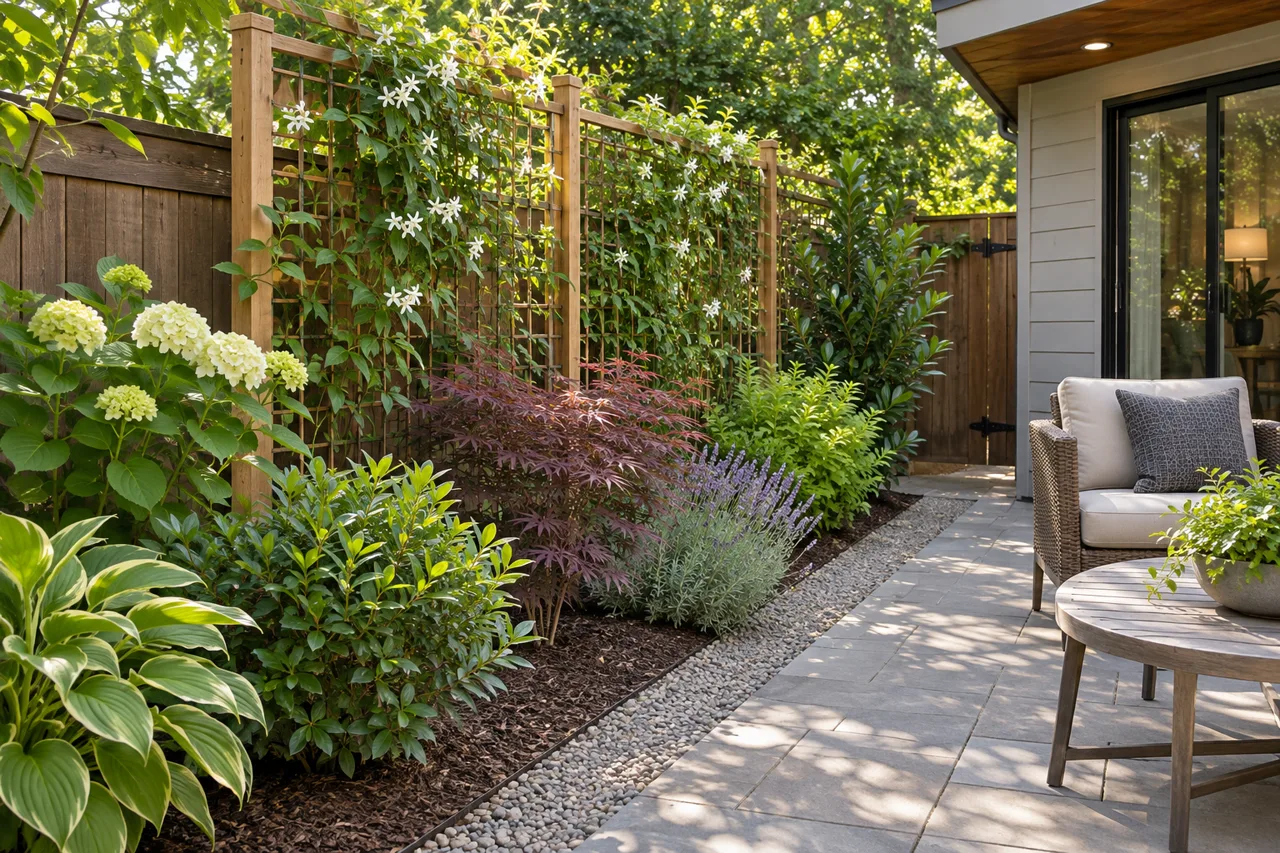
Find the view you want to block
Sit in the regular seat and have someone hold a light board at two candidate positions. Repeat while standing near the door. Mark the lines on a sketch. A view from a ground-floor window and an overlooking upper floor are separate problems. A tall boundary fence may do little for the second one. Before adding height, see whether shifting the seat beneath existing cover changes the view.
Compare three ways to screen the same spot
A solid panel provides instant screening but costs daylight and can take significant wind load. A slatted panel filters the view depending on angle. Test one at eye level before deciding how to orient the slats. A trellis with a suitable climber adds foliage over time, and its winter appearance depends on the plant. A hedge needs room for mature width and ongoing access for pruning. RHS examples show how angled or permeable screens balance shelter, light and privacy.
A worked patio example
Imagine a two-person table that is exposed to the neighboring path but has a good view toward the back of the yard. Move the table a little toward the house, then place a short panel perpendicular to the fence where it intercepts the path view. Keep the route from the door open. Add a narrow planting strip beside the panel only if the planter and its mature foliage fit without crowding the chairs.
Check placement before buying materials
Mark the screen footprint and swing of any nearby gate. Sit down at different times to see what happens to afternoon sun. Check the boundary, local height rules and permissions, and confirm that supports suit the exposure and surface. Leave room to clean behind a screen, replace a panel or prune a climber. A temporary mock-up is cheaper to revise than a finished installation.
When planting alone makes sense
Choose planting when there is adequate soil and room for growth, and when privacy can develop over time. Read mature height and spread for the exact cultivar and check winter coverage if the space is used year-round. For immediate screening while plants establish, use a discrete panel in the most exposed spot and judge the rest after a growing season.
Map the sightline before buying a screen
Ask someone to hold up a sheet where you can realistically install a screen. Sit in your usual chair and then stand at the patio entrance. Move the sheet closer to the seating until it blocks the view at both heights. Photograph the positions from the same spot so you can compare how much garden each option hides. If the unwanted view comes from above, check whether an overhead element would block it more efficiently than a taller boundary treatment.
Compare first-season coverage with mature coverage
A panel can block a close sightline as soon as it is installed. Its width is predictable, which helps if the opening you need to cover is narrow and the rest of the boundary can stay open. A planted screen changes as it grows. Before buying shrubs, mark their expected mature width with a hose or stakes. Walk around that outline carrying a watering can or garden tools. If the route is already tight, use a shallower planting scheme, move the screen closer to the seating, or protect a smaller area. Check summer and winter separately. A deciduous screen can work well for an outdoor dining spot that you rarely use in winter. If the same view looks straight into a year-round living room, consider where evergreen foliage or a fixed panel would help during the leafless months.
Decide how much shade you can accept
Test your mock-up when you actually use the space. A breakfast patio needs a different check from a dining area used after work. Consider what else sits immediately beyond the screen, such as a window, a vegetable bed, or a part of the garden that stays damp. If a tall solid surface costs too much light, try narrowing it or turning it at an angle so that it interrupts the view without covering the whole boundary. Before committing to a solid structure, check how it can be supported in local wind conditions and what rules apply at the boundary. Keep gates, meters, drainage access, and maintenance routes usable after the plants reach full size.
Plan access before setting posts
Mark the door swing, gate opening and route to any storage or equipment. Then mark the width of the proposed screen on the ground and carry a bulky object through the remaining gap. A screen that fits on a drawing may take up more space once posts, planters and foliage are in place. If you rent, ask what can be attached or excavated before selecting a product. A movable arrangement can help you test the location, but choose a setup appropriate for wind and follow its installation instructions.
Compare two layouts on the same photo
Take one photo from the seat you want to protect and another from the approach to it. Sketch a narrow panel near the seat on one copy and a longer planted screen on another. Compare how much of the unwanted view each would cover, where the first growing season would leave gaps and how each alters the path through the garden. If both options work from the seat, choose based on access, light and the time you are willing to wait for plants to establish.