Where to place a rain garden in your yard
Follow the runoff, test how the soil drains and compare two locations before routing a downspout to a rain garden.
A rain garden is a shallow planted basin that temporarily holds runoff while it seeps into the soil. Start by looking for a gently sloping route from a roof downspout to ground that drains well and is safely separated from foundations. A low spot that stays wet for days deserves investigation before you send more water there.
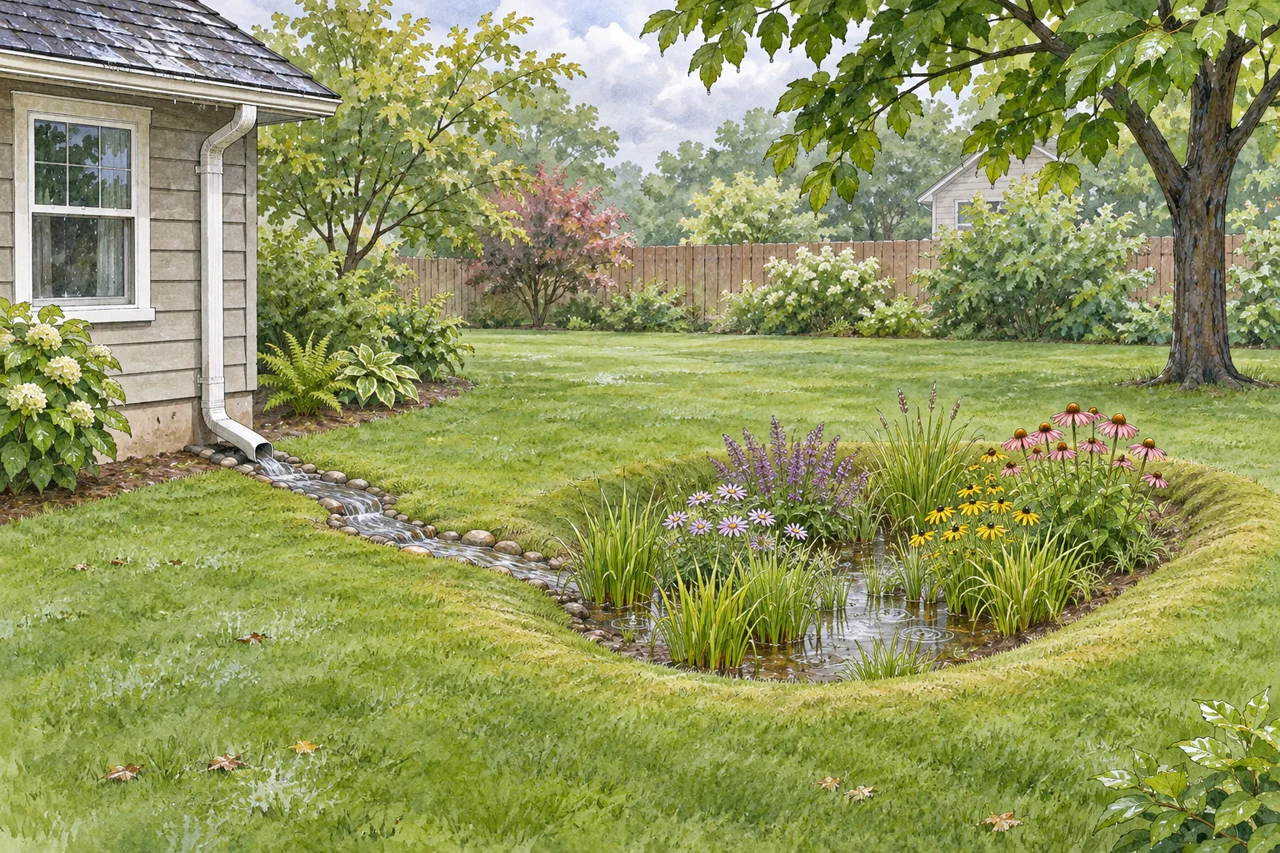
Watch where the water goes
During a shower, mark the downspout outlet, the route across the yard and the first place water collects. Look again the next day. A puddle may reveal a blocked route or compacted soil. Sketch where excess water could safely go when the basin fills, away from buildings, neighboring land and heavily used paths.
Compare the lawn and the damp corner
Imagine a downspout that discharges toward a lawn path. The lowest corner stays wet a day after storms. A slightly higher strip may be a better candidate if water can reach it by gravity and the soil passes an infiltration check. If that strip drains poorly too, pause and ask about another location or a locally permitted way to manage runoff.
Check the soil before choosing plants
Find underground utilities before digging. The Royal Horticultural Society describes a screening test using a hole about 25 cm deep: fill it, let it drain, refill it, and time the second drain. Minnesota Extension gives a different screening guide and advises at least 10 ft (about 3 m) from buildings. RHS recommends specialist advice for sites closer than 5 m. These are region-specific guides. Confirm local setbacks, soil, groundwater and overflow before construction.
Plant the center and edge differently
Choose regionally appropriate plants that tolerate temporary inundation near the inlet and basin center. Use plants suited to drier conditions around the rim. Sun exposure matters in both zones. Check mature spread so plants leave the inlet and overflow accessible.